
Dynamic Components

Build custom Salesforce UI. No code. No Apex.

Build the record pages, app pages and home pages your team actually needs: data tables, Kanban boards, charts, maps and forms, wired to your Salesforce data. Design them visually, then drop them on any Lightning page with App Builder.

85+
components in the builder
50+
interactions, no code
0
lines of Apex required
10
free production licenses

Filmed in a Salesforce org. A Kanban dropped on the canvas, pointed at Opportunity, then live on a Lightning page.Try the interactive demo →

What it is

Build UI components the way you build Flows

Dynamic Components is a native, no-code builder for custom Lightning components. If Flow Builder is where you design what users do, the Component Builder is where you design what they see: data tables, Kanban boards, timelines and more, assembled with clicks. Build once, then drop the component on any Lightning page, record page or Experience site.

In a real org

See it run on real records

Each clip is a Dynamic Component on a Lightning page, working on real Salesforce data.

Drag a card. The column totals update as it lands.

Filter by industry. The markers narrow to the accounts that match.

Sort a region. Rows reorder, the totals hold.

Filter by stage. The counts come from the records.

Hover a month. The tooltip follows the stacked bookings.

Reply on the case. The thread lives on the record page.

The library

85+ components, ready to drop in

Tables, boards, maps, charts, calendars and inputs. Every tile below is a real component render.

The component builder

Four panels. No editor.

Everything a custom component needs is set in these panels, and changes take effect in place.

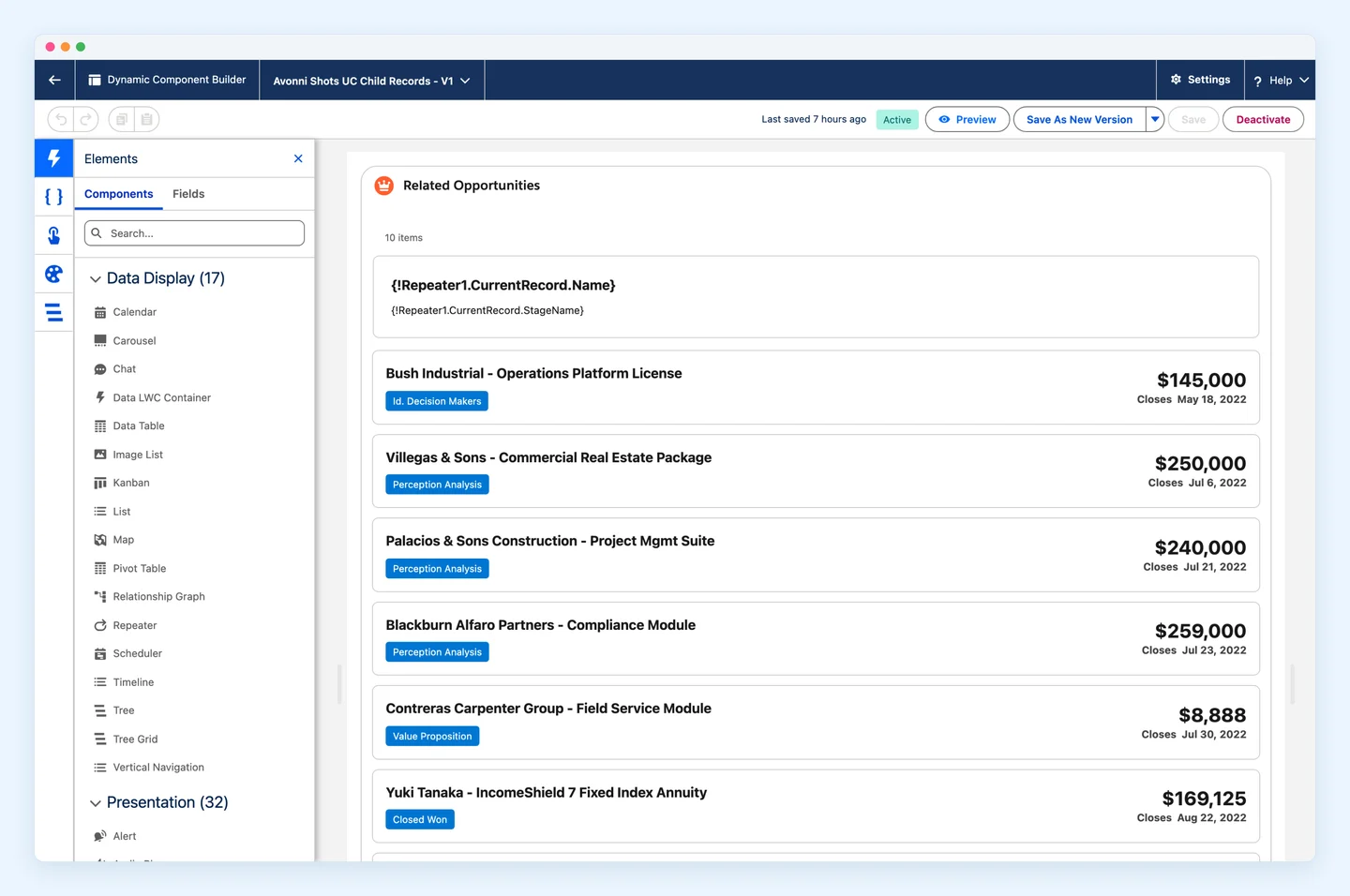
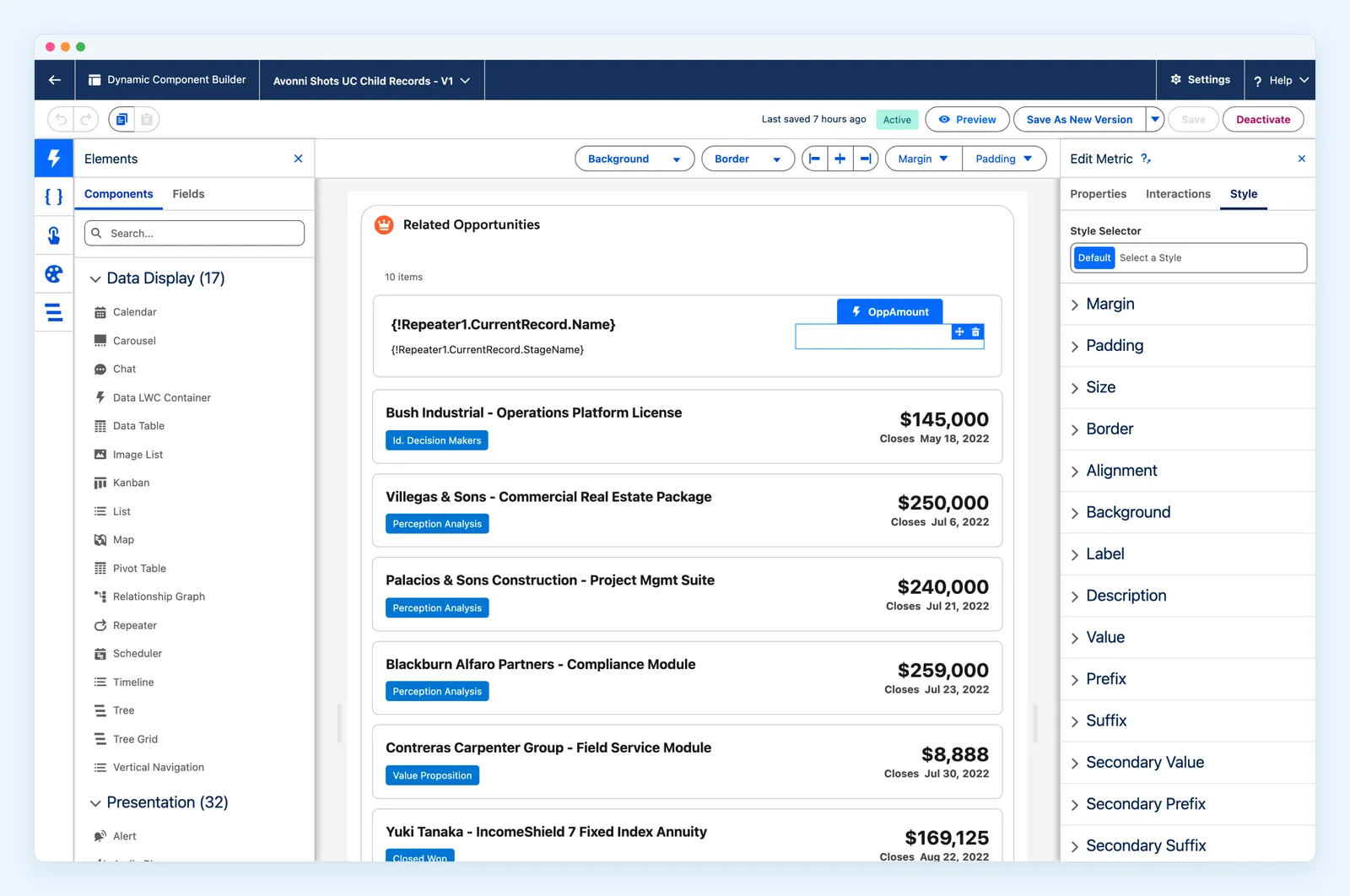
The Dynamic Component Builder canvas with a Related Opportunities list, the component palette on the left
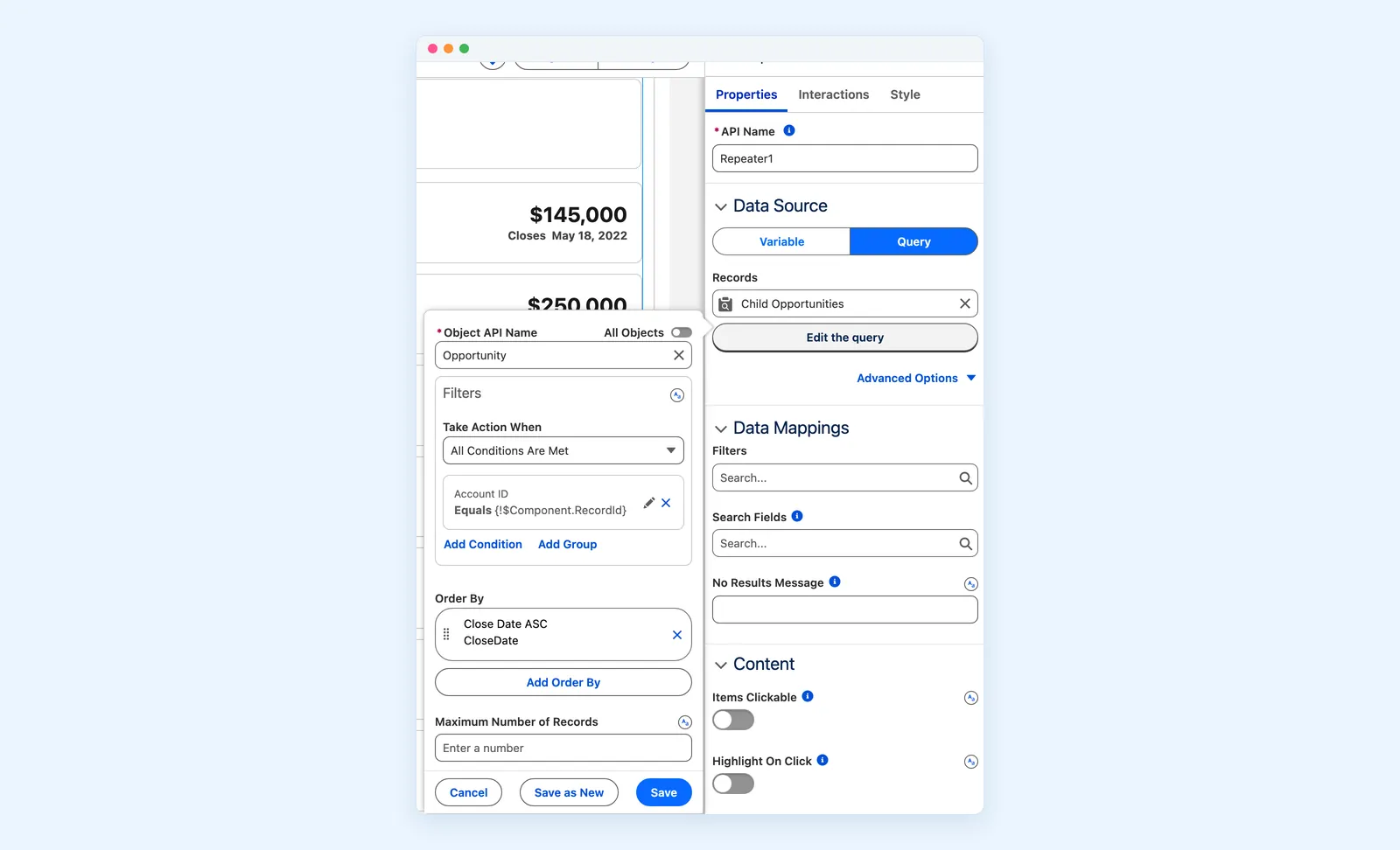
The query panel of the builder: the Opportunity object, a condition on the account and an order by close date
The Style panel of a Metric component in the builder: margin, padding, size, border, alignment, label and value settings
Where it runs

Deploy the same component everywhere

Record Pages

Related data and visual insights next to standard fields.

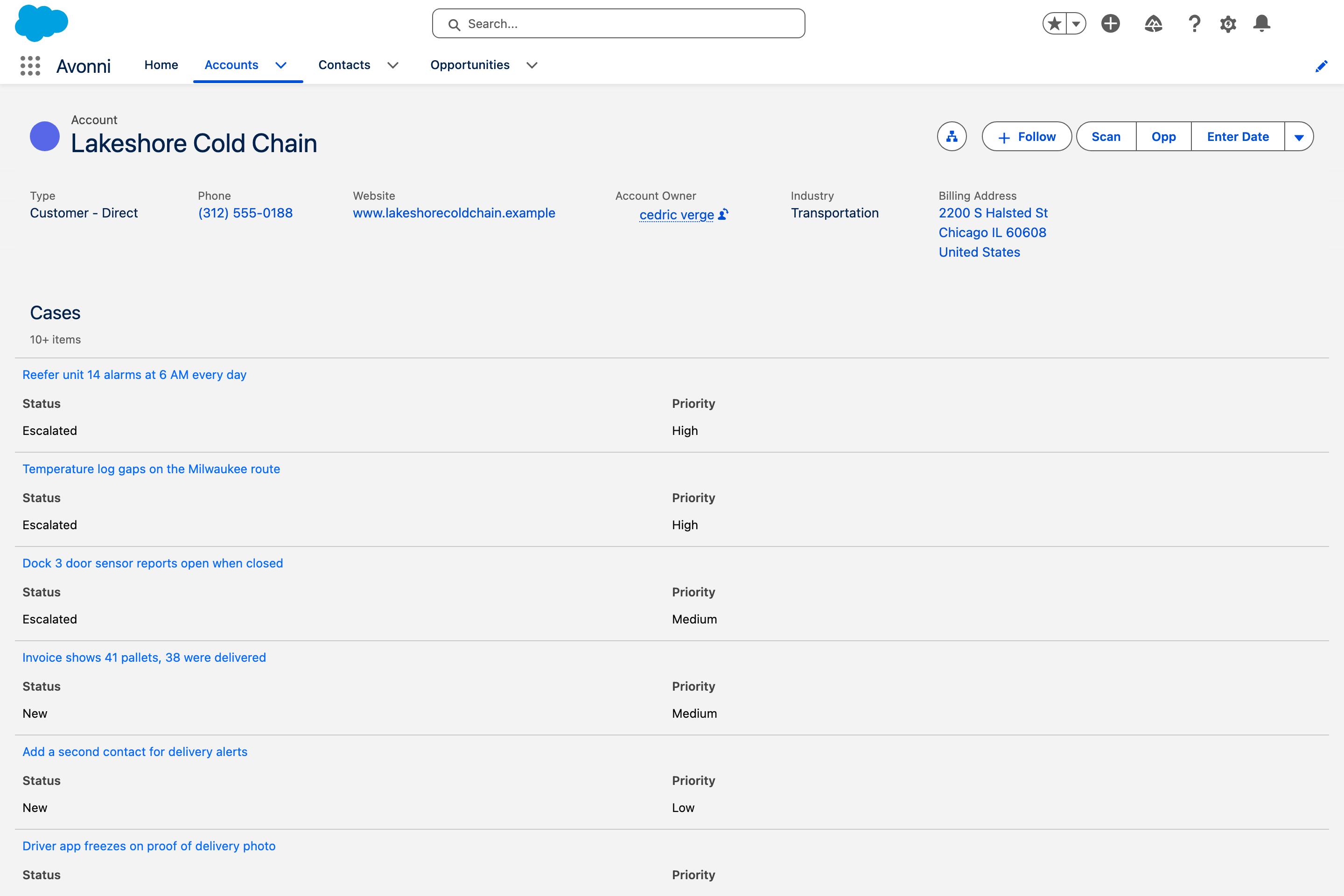
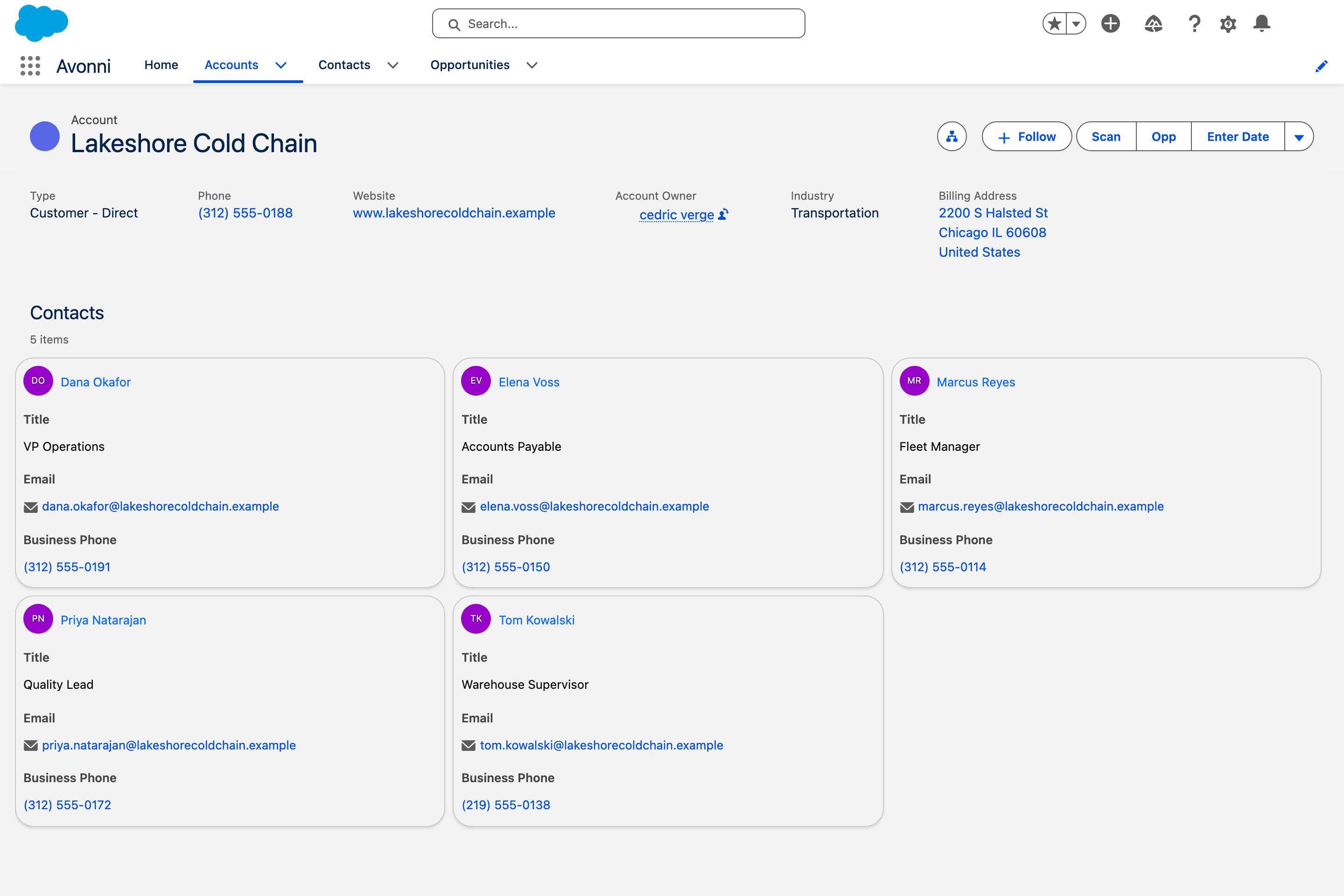
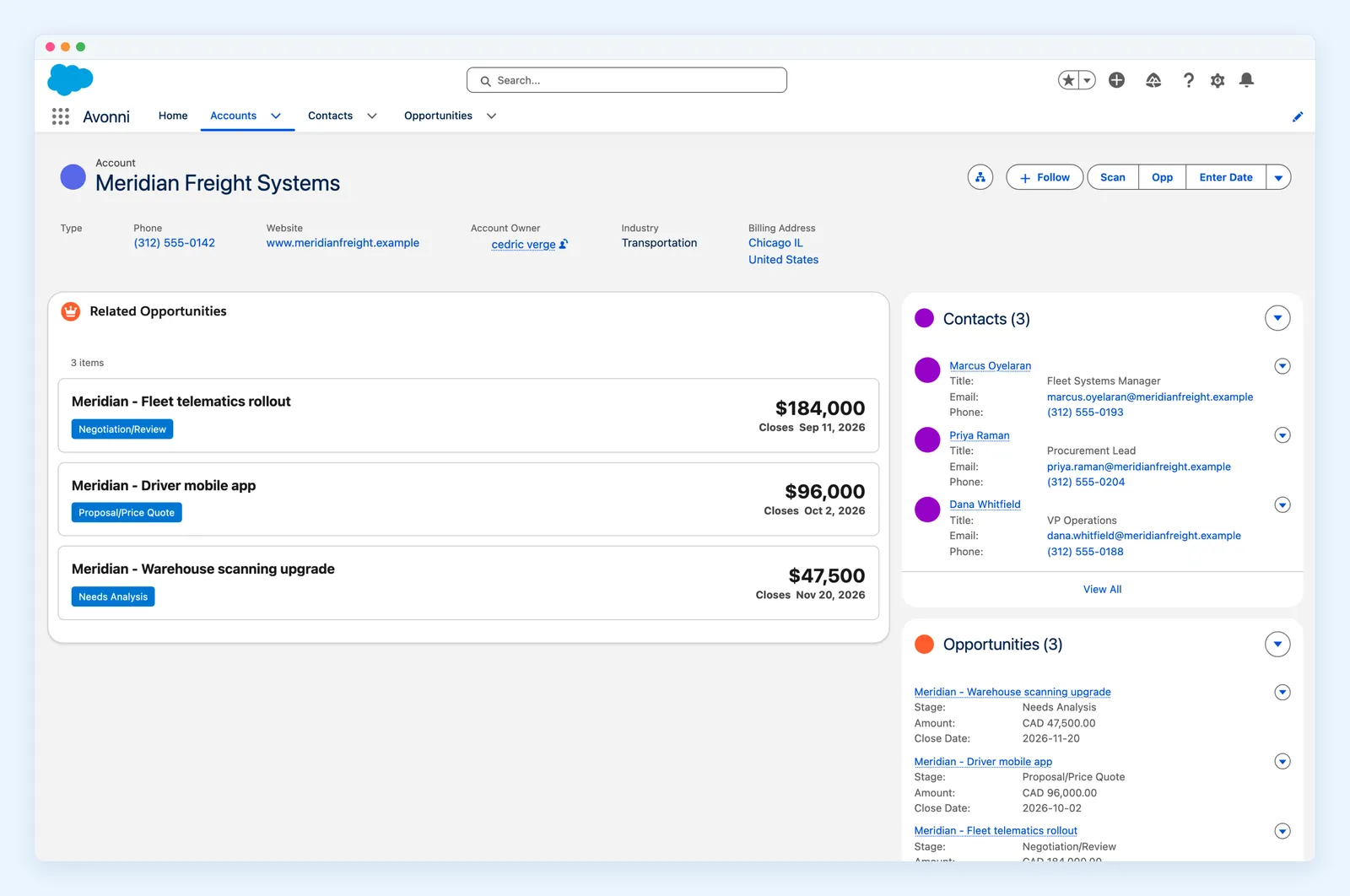
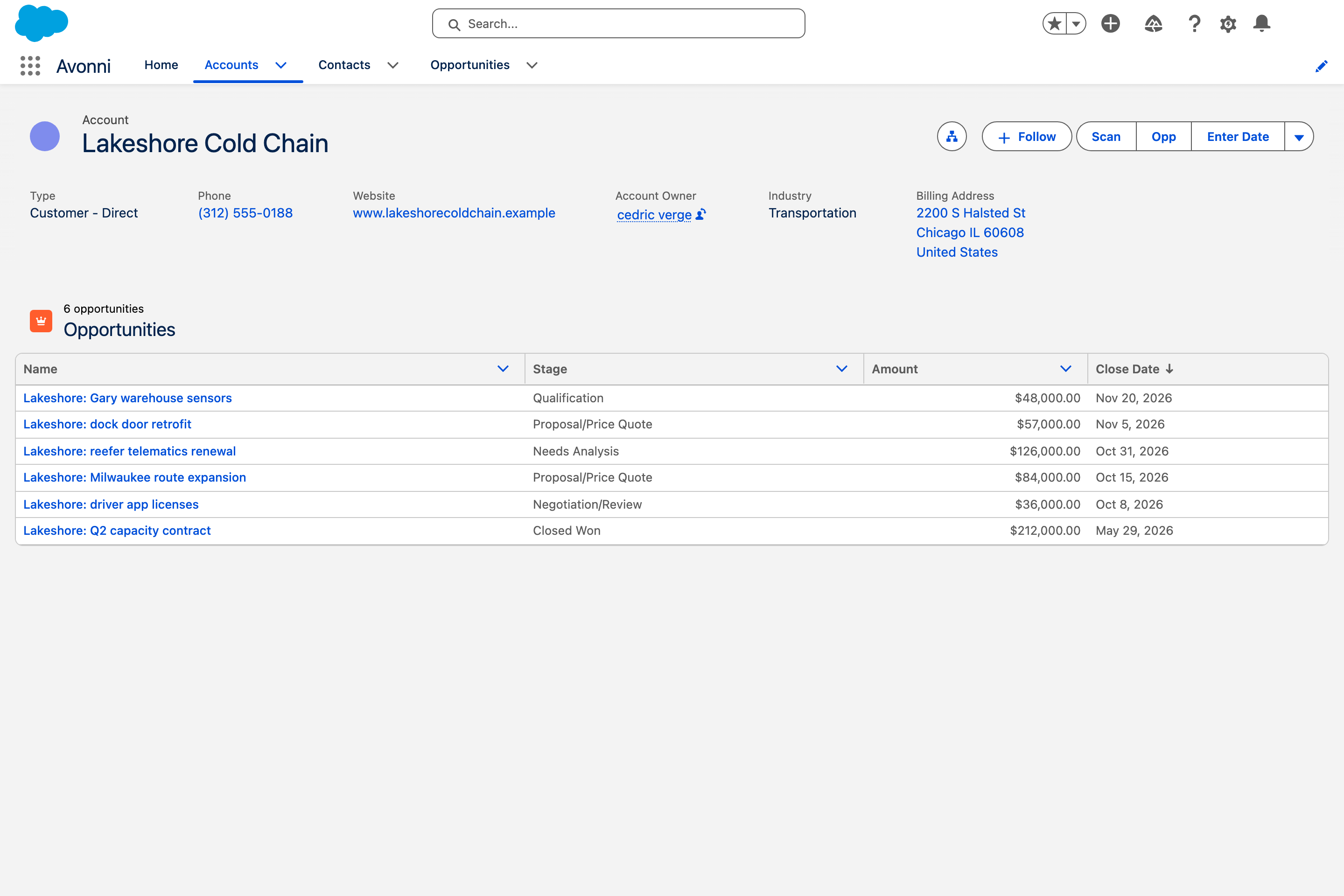
An Account record page in Salesforce with a Dynamic Component listing the related opportunities, their stage and amount, next to the standard contacts and opportunities lists

App Pages

Dashboards and internal tools, straight on Lightning App Pages.

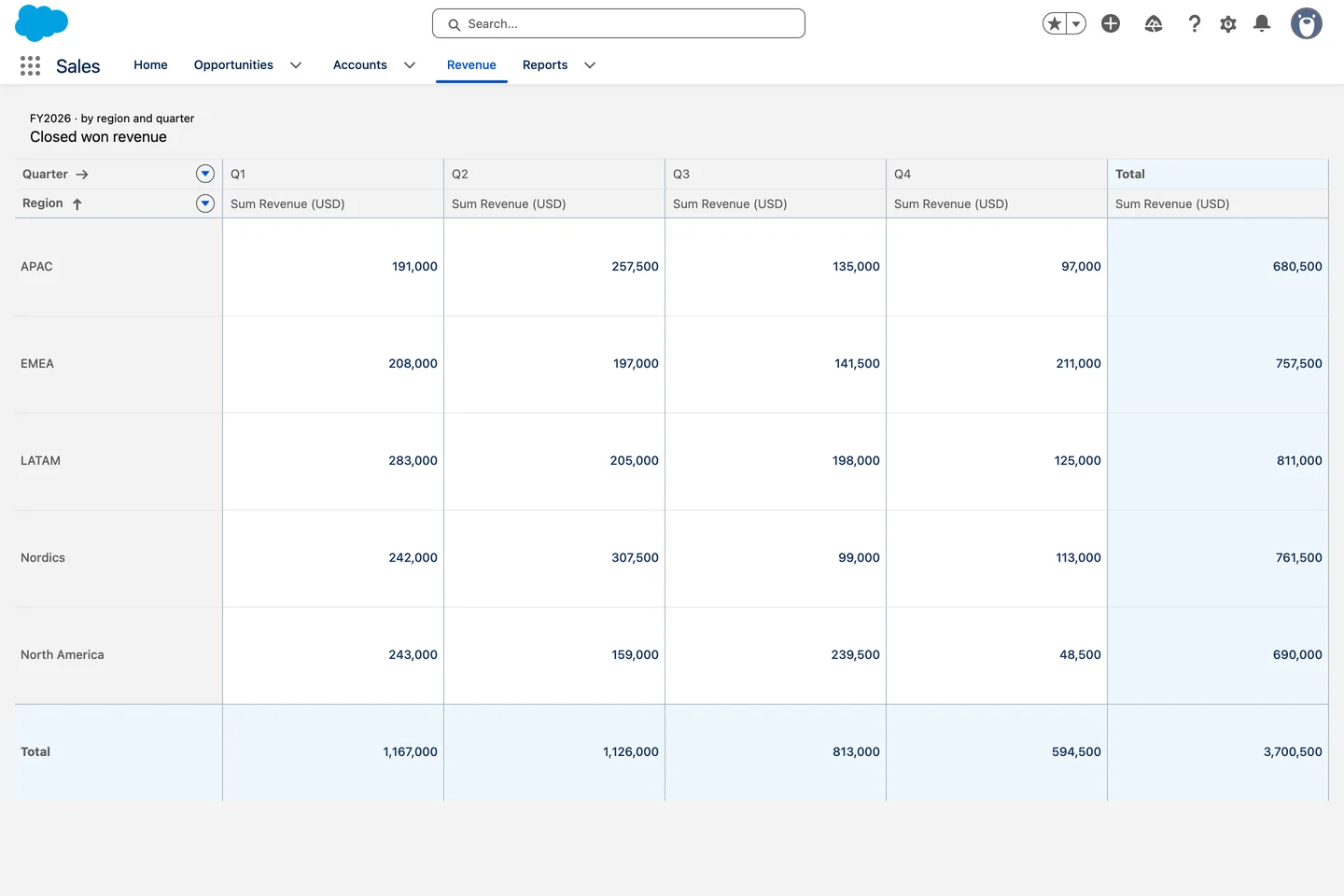
A Lightning App Page with a Dynamic Components pivot table of closed won revenue by region and quarter

Experience Cloud

Customer and partner portals, styled to match your brand.

Agent Skills

Describe the component. Your AI assistant builds it.

Tell Claude, Cursor or Copilot what you need on the page. It reads the real Dynamic Components catalog through the Avonni MCP server and writes the component definition, ready to import in the Component Builder or deploy with the CLI.

Shown in Claude desktop

One prompt. One component.

The avonni-dynamic-components skill checks the real catalog first, then writes the definition with documented attributes and interactions only. Nothing is deployed until you say so.

Salesforce logo

Works with Claude, Cursor, Copilot, Gemini and Agentforce

Claude ⌄Avonni MCP server connected
Add a Kanban of open Cases to the
Account page, grouped by Status.
✦
I'll check the real Avonni catalog before building anything.
Avonni MCPlist_componentsdynamic✓
Avonni MCPget_component_docsdcKanban✓
Skillavonni-dynamic-components✓
✦
Done. A Kanban of open Cases in four columns, drag and drop updates the status.
Account_Cases_Kanban.jsonforce-app/main/default/avonni
Nothing has been deployed. Review the file, then deploy it or open it in the Component Builder.
Reply to Claude…
Pick the right tool

Where Dynamic Components fits in the Avonni lineup

The same components underneath. What changes is where you build, and who does the building.

Most teams pair Dynamic Components with Flow Screen Components: pages for what users see, Flows for what they do.

Use cases

Lightning Pages, in a real org.

All use cases
FAQ

Common questions

How do I build a custom Salesforce UI without code?

Use a visual builder that runs inside Salesforce. With Dynamic Components, you drag components onto a canvas, connect them to your records with a query, add formulas and interactions, then place the result on any Lightning page from App Builder. No LWC, no Apex.

Do I need development experience?

Dynamic Components are designed for admins and technical users comfortable with complex configuration.

Where can I use Dynamic Components?

On Lightning App Pages and Record Pages through App Builder, and on Experience Cloud sites. Build once, deploy the same component everywhere.

How does Salesforce data get into a component?

Through the visual query editor. Connect any standard or custom object, filter and sort the records, and bind the results to your components, with no Apex controller needed.

How is this different from Flow Screen Components?

Dynamic Components are for what users see on a page. Flow Screen Components are for what users do inside a guided, multi-step process. Most teams end up using both together.

How does licensing work?

You get 10 free production licenses, and sandbox use is unlimited. Install from the AppExchange and start building today.

Ship your next custom UI without code

Install Dynamic Components from the AppExchange and build your first component today.

Available on the AppExchange