
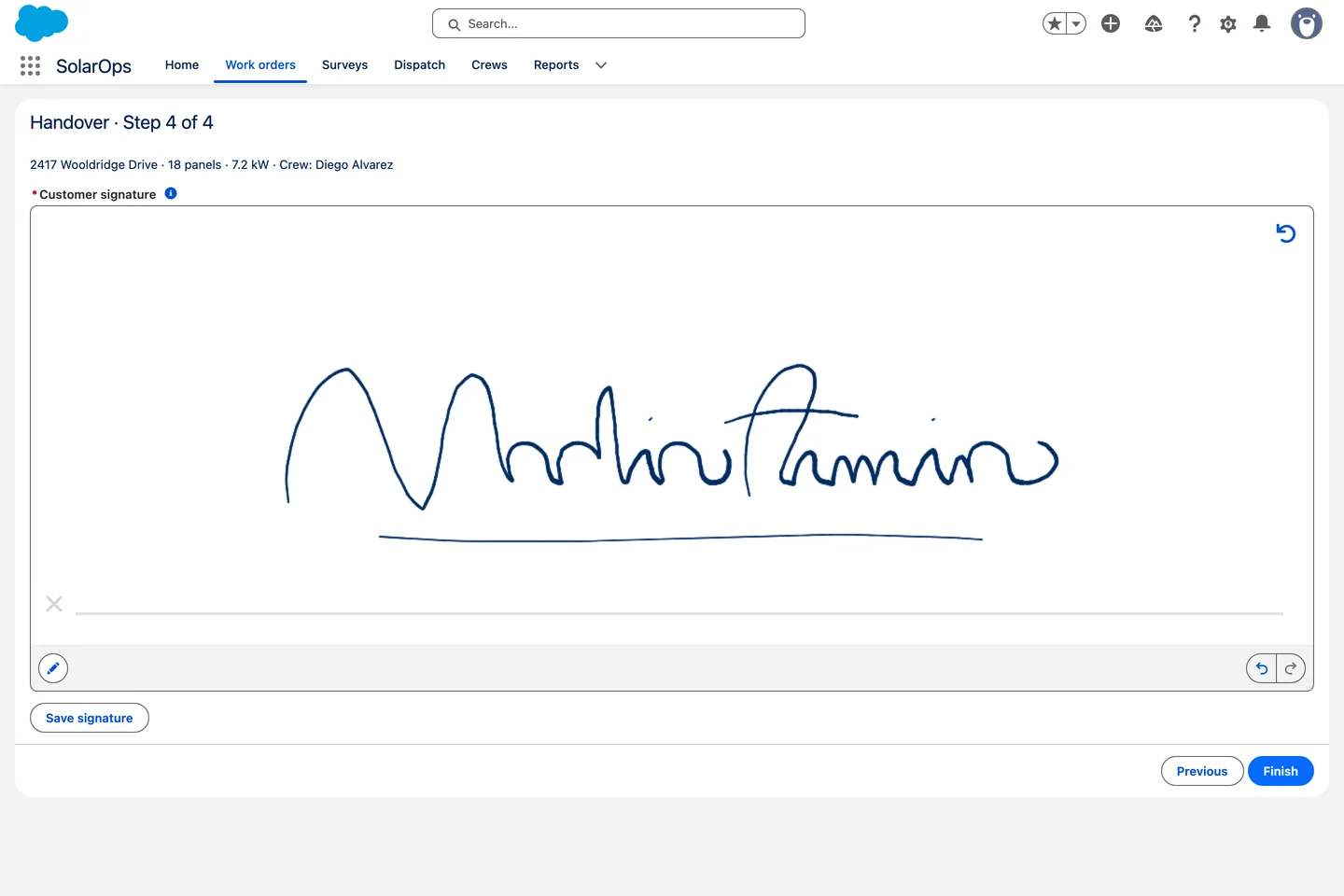

customer signs off the installation.
Configure a working screen on real Salesforce data during the workshop. Stakeholders click instead of imagining, and what they approve is what ships.

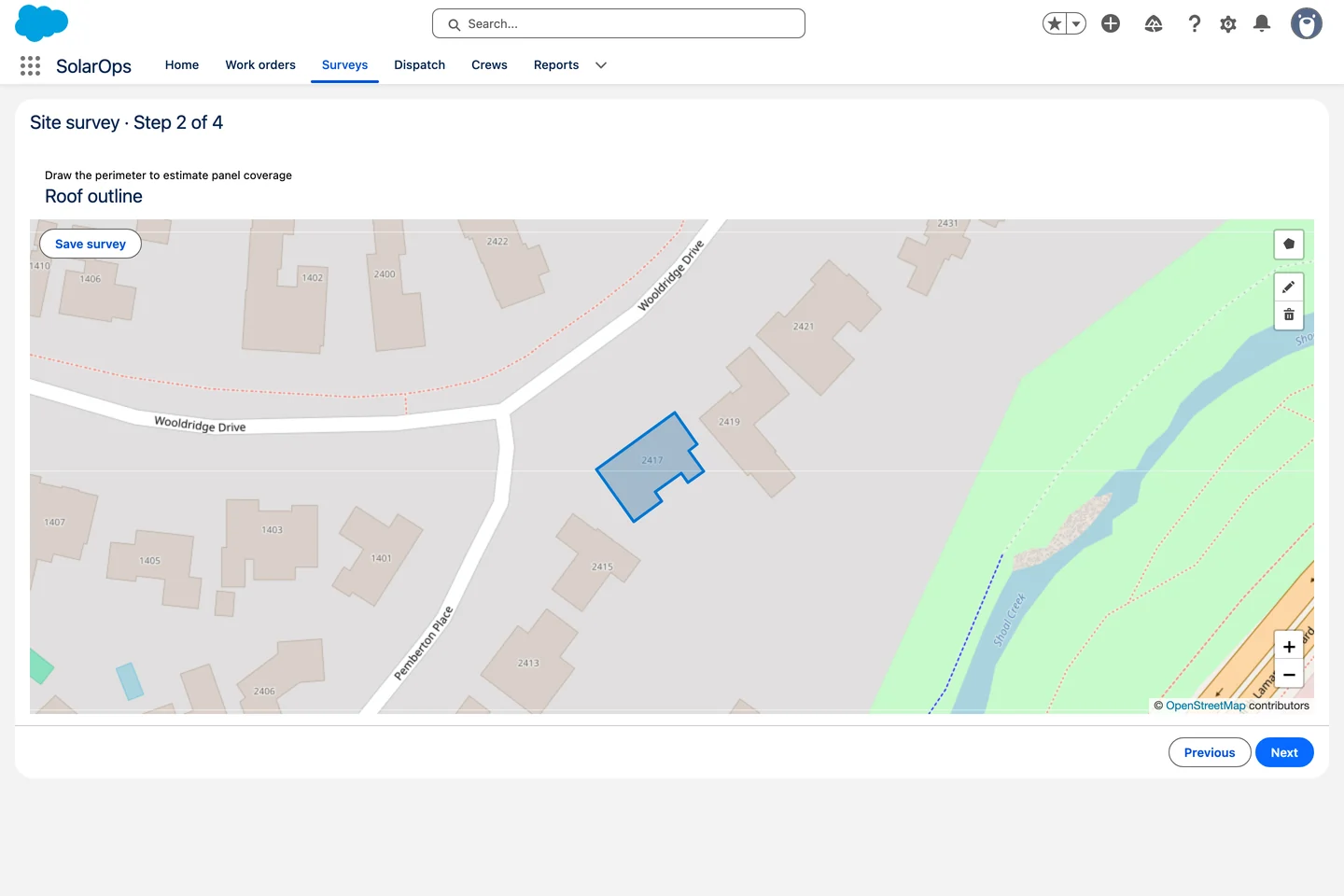
Real screens from real orgs, each one configured in an afternoon on the org's own objects.

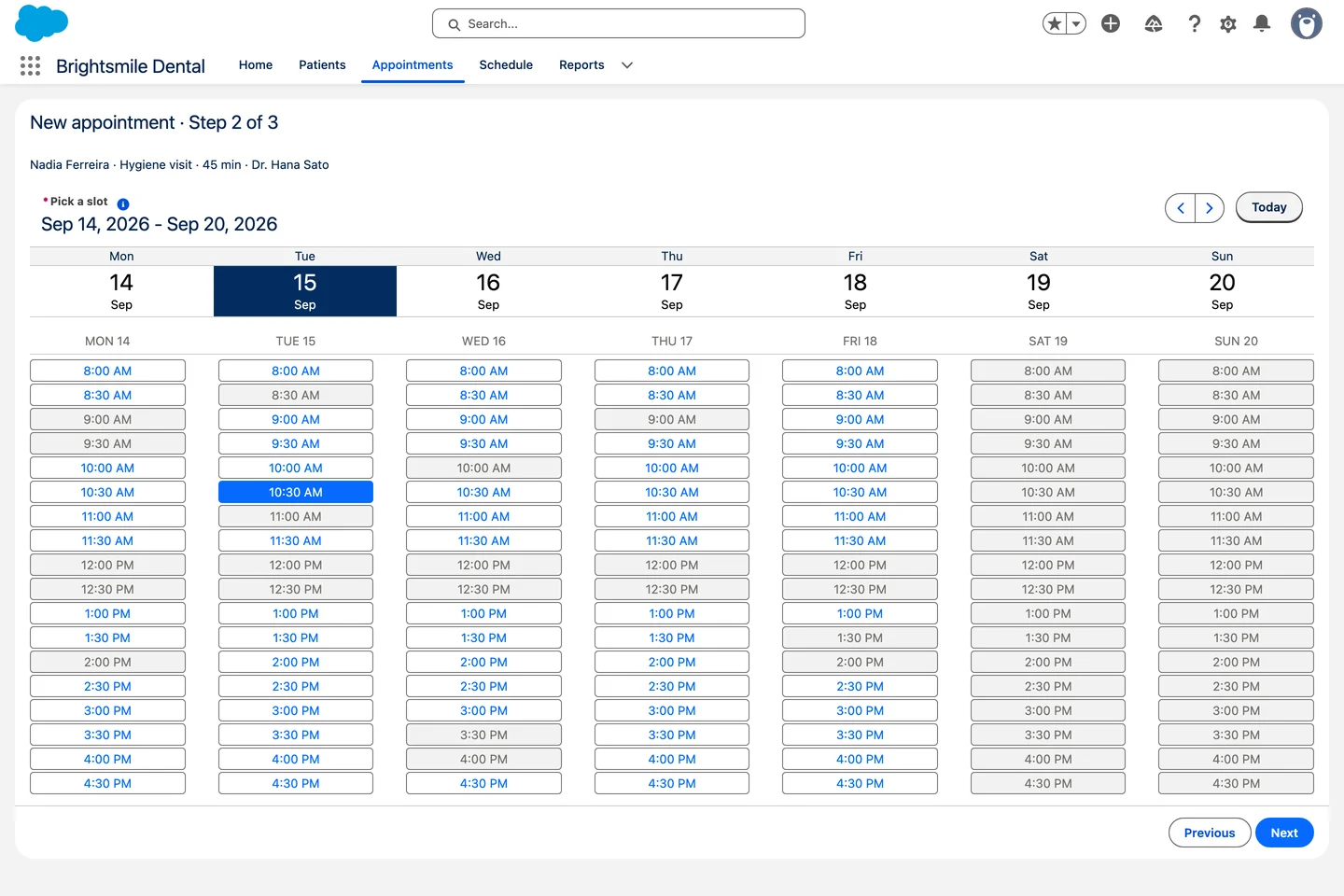
The requirement, as a screen. One week of slots, the taken ones greyed out, one tap to pick.
A sandbox and an afternoon are enough to have something to show.

Sign-off that lands on the record. The signature becomes a file on the work order.

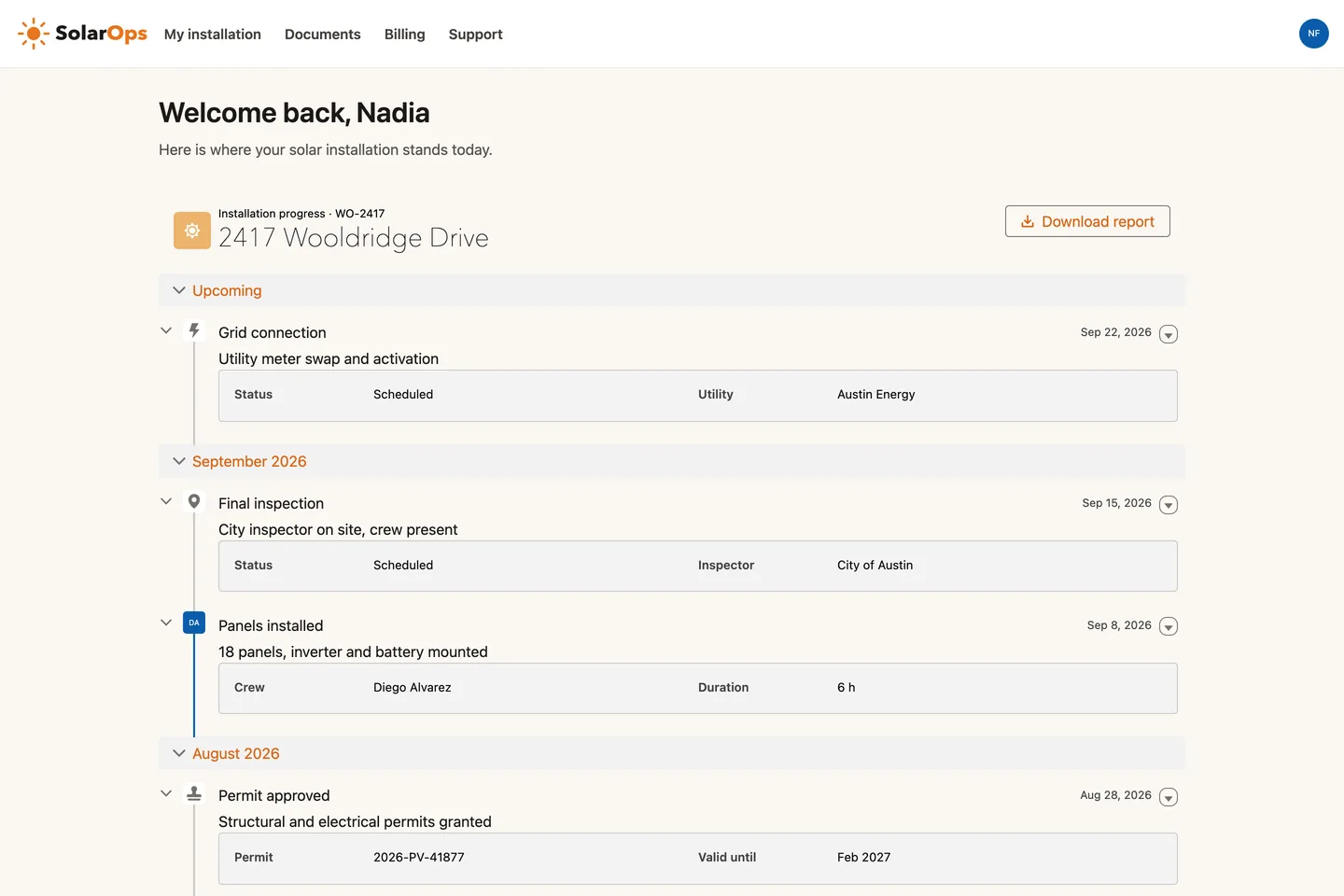
The customer's view, made visible. Seven steps on a timeline, without a login.
Describe the process in plain English and Claude builds the screen with real Avonni components, ready to review in the sandbox. The spec and the build stop drifting, because they are the same thing.
Shown in Claude desktop
The Avonni skill checks the real catalog first, then writes the flow with documented settings only. Nothing changes in the org until you say so.
Works with Claude, Cursor, Copilot, Gemini and Agentforce
You write the requirement, everyone signs off on a description, and the disagreement appears at UAT when the screen finally exists.
You configure the screen on real data, the room reacts to it immediately, and sign-off happens on something everyone has actually seen.
Components read your objects and fields, so the screen shows the org as it is.
Configuration is point and click, so the first screen never waits on a developer's backlog.
What you configured in the workshop is what moves forward. It is not a mock that gets rebuilt.
Sharing rules, field-level security, and the org's permissions apply exactly as they already do.
It is definitely a great tool that needs to be added to Admins, Developers and Business Analysts' toolbox.
No. You pick the object and the fields in a configuration panel, and the component queries the data for you.
Install it in a free developer org or a sandbox and build on your own. Ten production licenses are free when the project moves forward.
No. It is a real configuration on the platform, so the team continues from it rather than rebuilding it.
Components run inside Salesforce and respect the org's sharing rules and field-level security as they stand.
Install the package in a sandbox and configure one requirement before the next session. Free for up to 10 production users, unlimited in sandboxes.