
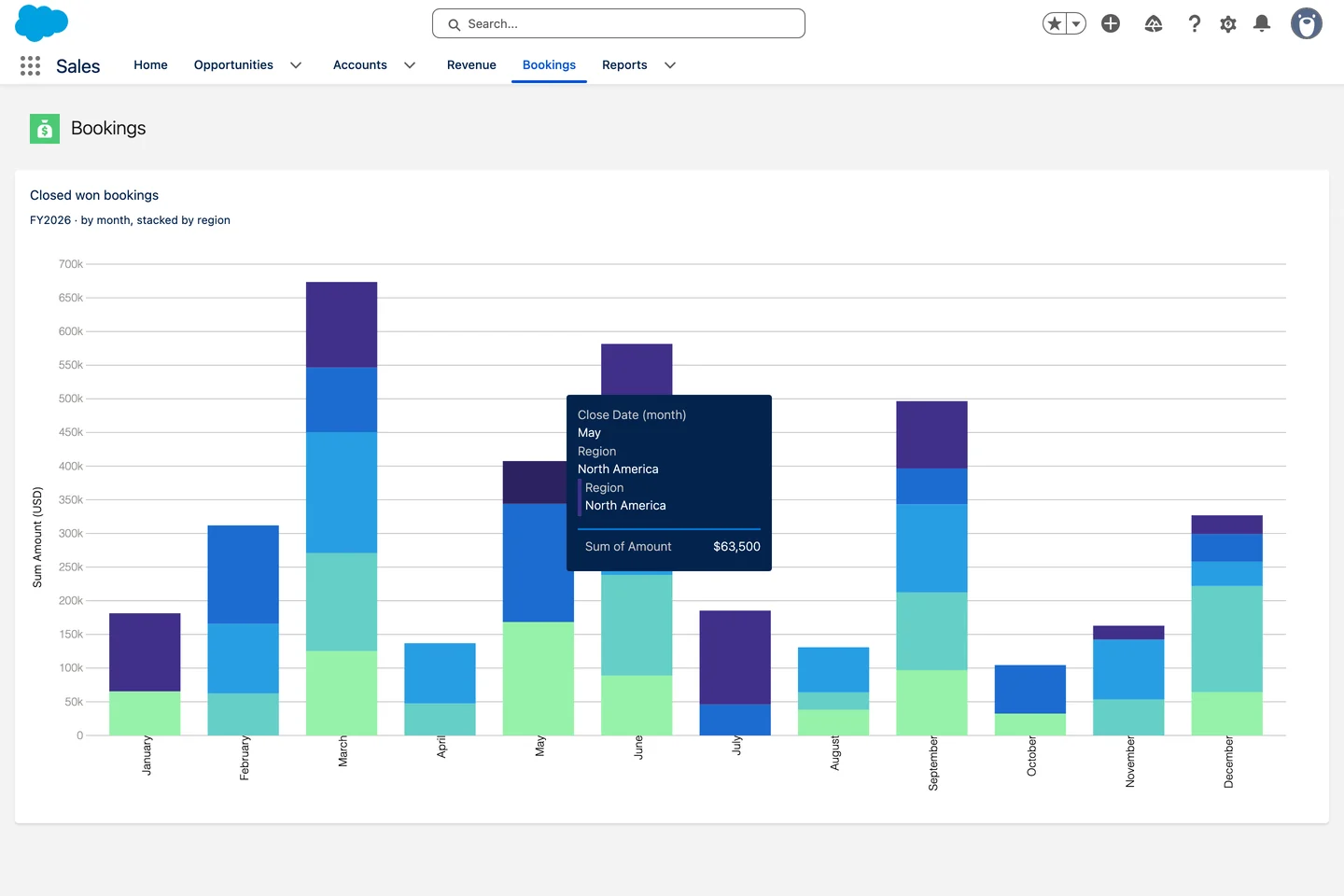

by month, stacked by region.
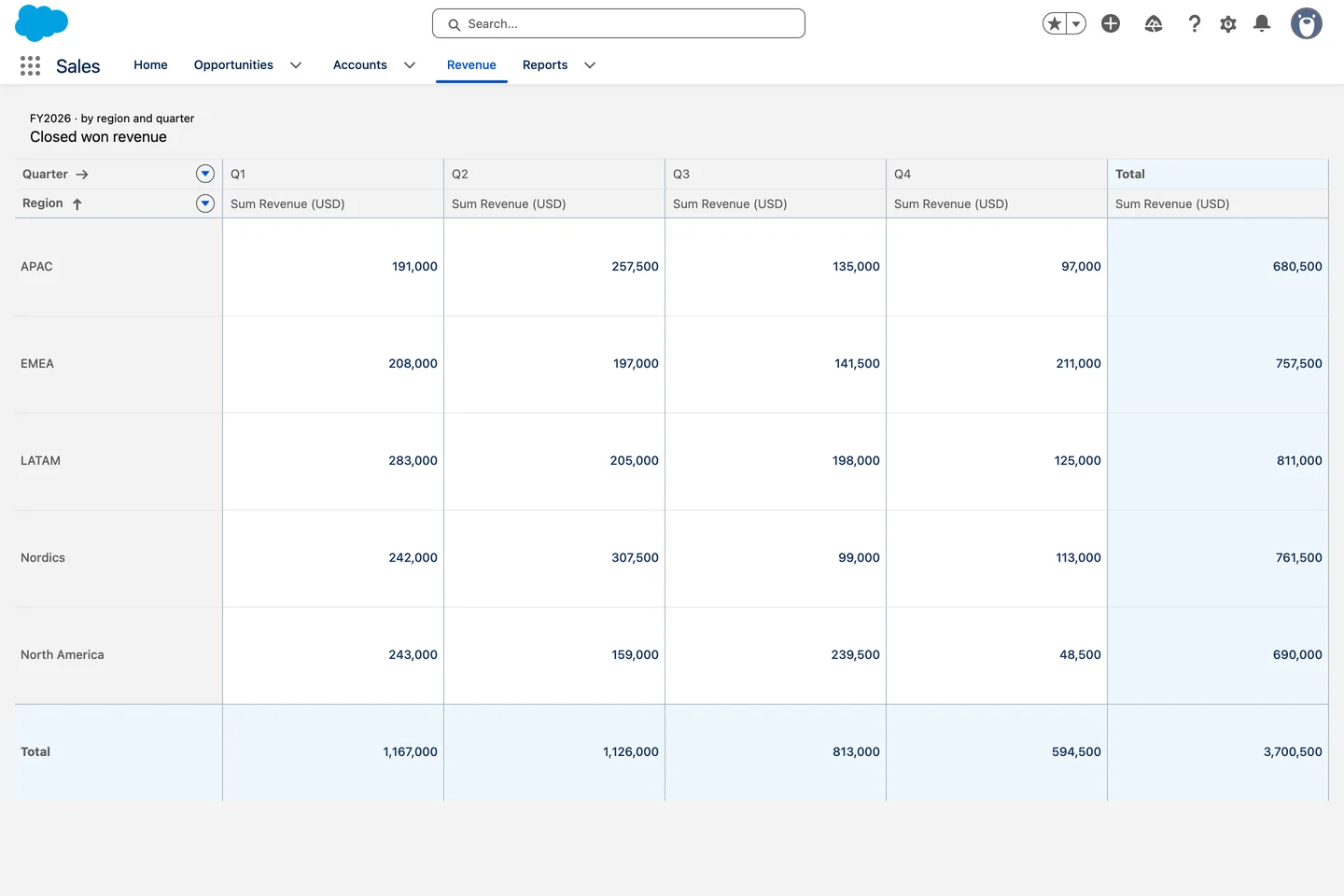
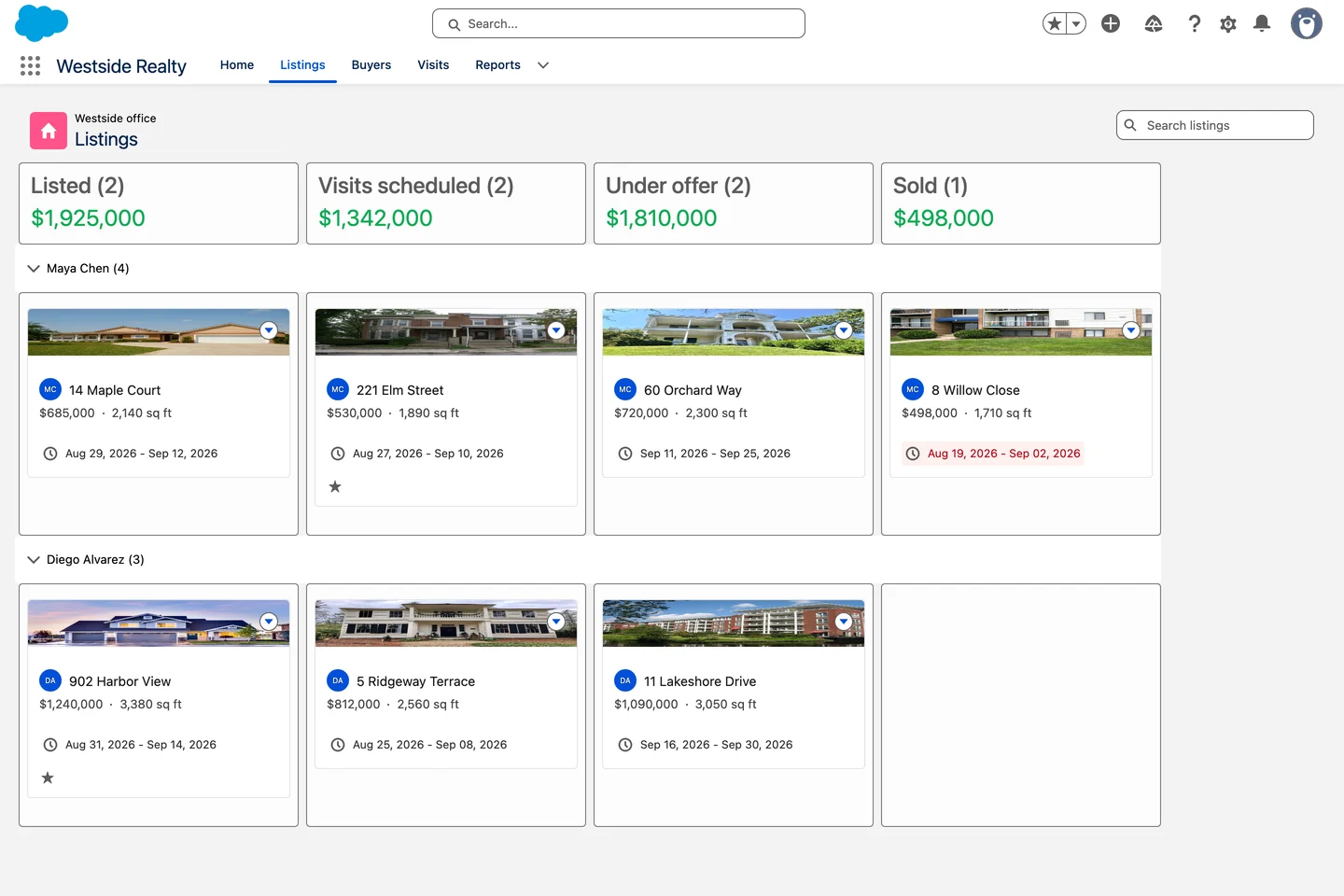
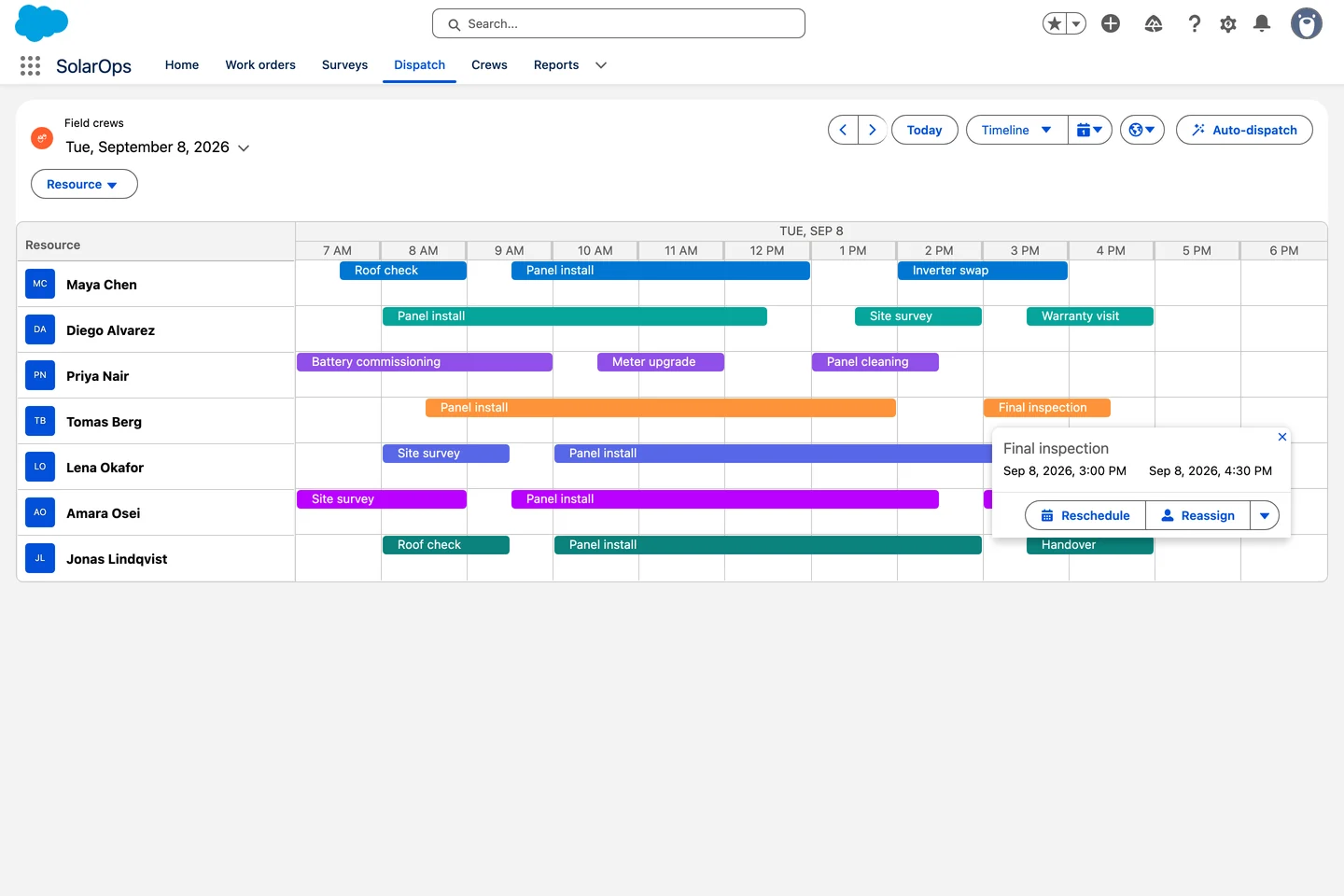
Pipeline boards, renewal tables and schedules configured on real records in your demo org, the same afternoon. When the prospect asks if it can do that, you click.

Real screens from real demo orgs, configured against the objects you loaded.

The pipeline board they asked for. Grouped by stage, totals per column, drag and drop that updates the record.
From the discovery call to a clickable demo.

Numbers that carry the story. Twelve months of bookings, live from the opportunities you loaded.

Field service on a timeline. Seven technicians, reschedule and reassign from the popover.
Paste what the prospect described. Claude picks real Avonni components, writes the configuration and you drop it in the demo org. Follow-up questions get a click, not a slide.
Shown in Claude desktop
The Avonni skill checks the real catalog first, then writes the definition with documented settings only. Nothing changes in the org until you say so.
Works with Claude, Cursor, Copilot, Gemini and Agentforce
The prospect asks to see their process. You show a standard record page, promise the rest is possible, and hope the slide carries it.
You configure the board, the table, and the schedule they described, and the demo answers the follow-up questions instead of deferring them.
A managed package on AppExchange, reviewed by Salesforce, which is the first question their architect will ask.
Demo orgs and sandboxes are free, so you can keep as many scenarios standing as you need.
Sharing rules and field-level security apply, so the demo behaves the way their org will.
The configuration you demoed is deployable. Delivery starts from it rather than from a slide.
Super easy to prototype and build beautiful and interactive UIs. Saved soo many hours of LWC development!
Yes. Sandboxes and developer orgs are unlimited and free, so you can keep several demo scenarios standing at once.
It is a managed package that passed the Salesforce Security Review, and it runs inside the org under existing sharing rules.
The configuration is real platform configuration, so the implementation team continues from it instead of starting over.
Install from AppExchange, point a component at an object, and you have a working screen the same session.
Install the package in a demo org and build one scenario before the next call. Free for up to 10 production users, unlimited in sandboxes.